Pages

Oil and Gas Forum

Showing posts with label Gas Pricing. Show all posts

January 3, 2013

Panel recommends average global prices for domestic gas


The Prime Minister-appointed Rangarajan Committee has suggested mandating a price of domestically produced natural gas at an average of international hub prices and cost of imported LNG instead of present mechanism of market discovery.

The panel in its report made public today suggested first taking an average of the US, Europe and Japanese hub or market price and then averaging it out with the netback price of imported liquefied natural gas (LNG) to give sale price of domestically produced gas.

Industry sources, however, raised doubts saying acceptance of the recommendations would lead to overriding of the signed contracts. Currently, Production Sharing Contracts (PSC) provide for gas being sold at an arms-length price discovered through market bids invited from potential users.

Acceptance of the recommendation would mean government mandating a price of gas and ending the last of the remaining freedoms available, they said.

The government has already taken over the task of fixing users curbing marketing freedom guaranteed in PSC.

Sources also questioned how a market price in the US or Europe which is a function demand and supply in that region, could be applied to a hugely fuel deficit nation like India.

The US has low gas prices because of abundant fuel with the advant of shale gas while demand in Europe and Japan, unlike India, has fallen.

The panel headed by C Rangarajan, Chairman, Economic Advisory Council to the Prime Minister, said the PSC provides for arm's length pricing and prior Government approval of the formula or basis for gas pricing, subject to policy on natural gas pricing.

"Since no market-determined arm's length price currently obtains domestically and nor is this likely to happen for several more years, a policy on pricing of natural gas has been proposed," it said.

The Committee recommended deriving one price from "the volume-weighted net-back price to producers at (LNG) exporting country well-head for Indian imports for the trailing 12 months."

Simultaneously, the volume-weighted price of US's Henry Hub, UK's NBP and Japan Custom Cleared prices for the trailing 12 months be calculated.

"The arm's length price thus computed as the average of the two price estimates would apply equally to all sectors, regardless of their prioritisation for supply under the Gas Utilisation Policy," it said.

Industry sources said no LNG exporting country ever declares its netback or producer price and it would be extremely difficult to determine that. 

"The proposed policy would provide for estimation of an unbiased arm's length price based on an average of two prices, which can be interpreted as alternative estimates of an arm's length price for the Indian producer," the Rangarajan panel said.

The suggested formula will apply to pricing decisions made in future, and can be reviewed after five years when the possibility of pricing based on direct gas-on-gas competition may be assessed, it added.

On the future exploration contracts, it said the existing PSC allows the contractor to recover his cost, before giving the government its share in the contractor's revenues, in case there is commercial discovery leading to production.

"Under this system, a close scrutiny of costs becomes critical for the Government since there is incentive for contractors to book as costs expenses that do not reflect the true economic cost to the contractor (eg through transfer pricing)," it said. "This is perceived by contractors as interference in commercial decision-making, whereas the government and CAG view it as legitimate and necessary."

Stating that cost recovery is at the root of the problems experienced, it proposed to dispense with it, in favour of sharing of the overall revenues of the contractor, without setting off any costs.

"The share will be determined through a competitive bid process for future PSCs," the report said. "The bids will be made in a bid matrix, in which the bidder will offer different percentage revenue shares for different levels of production and price levels."

This will ensure that as the contractor earns more, government gets progressively higher revenue, and will also safeguard government interest in case of a windfall arising from a price surge or a surprise geological find.

The committee has also recommended that an extended tax holiday of 10 years, as against 7 years already available for all blocks, be granted for blocks having a substantial portion involving drilling offshore at a depth of more than 1,500 metres, since cost of a single well can be as high as USD 150 million.

Further, the committee has recommended extending the timeframe for exploration in future PSCs for frontier, deep-water (offshore, at more than 400 m depth) and ultra-deep-water (offshore, at more than 1,500 m depth) blocks from eight years currently, to ten years. 

Source: PTI 

December 25, 2012

Rangarajan panel moots new plan for gas pricing


A committee headed by C Rangarajan, the head of the Prime Minister's Economic Advisory, has suggested linking the price of domestically-produced natural gas to international benchmarks such as US' Henry Hub as well as the average wellhead price at which India imports gas, government officials said. 

"The formula balances interests of gas producers and consumers. Produces should have enough incentive to produce, but they should not be allowed to exploit consumers because gas is a scarce commodity," said an official with direct knowledge of the matter. 

The government had asked the committee to examine the pricing of gas after Reliance Industries BSE -0.36 % and its partner BP wrote to the Prime Minister earlier this year, demanding that they be allowed to charge market price of KG-D6 gas. 

RIL is selling gas at the government-determined rate of $4.20 per unit, which is about one-fourth the price of imported gas. The panel has suggested that a formula should be used to fix prices of domestically produced gas till a competitive gas market comes into being in India. 

The panel accepted the principal of linking domestically produced gas rates with the price of a substitute, imported liquefied natural gas (LNG) but only after excluding liquefaction, transportation and re-gasification charges. 

The committee has ruled out any immediate change in the price of natural gas produced from the Reliance-operated D6 block because the government had fixed its gas price for five years, a period which will end in March 2014, officials with direct knowledge of the matter said. 

"The formula would apply prospectively and not for prices already approved," a source in the committee said. The committee has submitted its report to the Prime Minister. The panel's suggestion is in line with the oil ministry's thinking, a ministry official said. 

"Former Petroleum Minister Murli Deora had rejected RIL's demand to raise gas price in October 2010 and the new Petroleum Minister Veerappa Moily has already said that no revision of gas price could be considered before 2014," an oil ministry official said. 

The PM's office may seek the oil ministry's view on the report before placing it before the cabinet or the empowered group of ministers set up to decide on gas pricing, government officials said. 

The PM had set up the panel to examine gas pricing besides reviewing the existing contracts following adverse comments from the Comptroller and Auditor General of India. 

The CAG had said last year the oil ministry had not enforced contracts effectively and had overlooked lapses that adversely impacted the state's share of profit from fields. 

Source: Economic Times

June 25, 2010

Gas price: CEA, NTPC differ

The Central Electricity Authority and NTPC appear to be taking different stands on having a common price for gas from different sources, called pool pricing. 

CEA is open to considering separate price pools for power and fertilizer sectors with certain conditions, NTPC has outrightly rejected the idea. 

Commenting on a report by Spain’s Mercados Energy prepared for gas utility GAIL, CEA said the pooling option excluding spot LNG (gas imported in ships) suits the power sector. Supporting separate pools for power plants, it said ‘‘ electricity generated by burning gas is distributed in a competitive environment and tariff is decided by regulators ... The nodal agency and the pool can be achieved with a few necessary operational regulations... and may be considered.’’ 

But NTPC has told the power ministry it is opposed to any kind of pooling as the resultant price will be higher than the present average cost of fuel sourced variously by power producers. With a common price, both power producers and gas importers will lose incentive to source LNG at competitive rates. 

NTPC said the pool term of 4-5 years will create uncertainty as power plants are planned on long term of 25 years or more and fuel supplies are also tied up as such on term contracts. Price pooling will put old plants at a disadvantage because of their lower efficiency. Power producers will also have no incentive to schedule their production plan efficiently and higher pool price could also affect viability of many projects that were financially planned with lower fuel costs.

Source: Economic Times
__________________________________________________________________________________

June 8, 2010

Why delink gas prices from oil contracts

The economic recession of 2008 has come out as an eye-opener for the stakeholders in the global energy markets as it caused a visible crack in the historical linkage between the prices of natural gas and that of long-term crude oil contracts. The pattern of movement in gas prices started to diverge markedly from the oil prices with a substantial glut in worldwide natural gas production, driven by technological advancements and rapid growth of unconventional gas resources (shale gas, coalbed methane, etc), especially in the US, coupled with a declining demand (reinforced by worldwide recession). The price of gas declined substantially and eventually increased the competitiveness of the global gas market (especially LNG). The fallout of this persistent glut, IEA predicted in its World Energy Outlook 2009, would eventually be in the form of pressure on long-term gas contracts pricing (usually indexed to price of long-term oil contracts), delinking of gas prices from oil contracts, rise in sale of gas on a spot basis and emergence of a new regional gas demand-supply dynamics through spot price-linkage and integration of regional gas markets in Europe and Asia-Pacific.

The Indian government is currently mulling a rationalisation of domestic natural gas pricing. The rationalisation would serve a dual purpose of delinking price of the crude from the production-sharing contracts between the gas producers and the government, and eliminate the differentials that exist in gas prices from different sources. At this juncture, it needs to be mentioned that the prices of LNG in the Asia-Pacific basin are usually linked to crude oil and hence the prices of LNG that India procures are also linked to that of crude oil. However, given that the natural gas sector is still at its nascent stage and expected to capture a substantial share of India’s future energy mix, it is crucial to dissociate the pricing of the natural gas from the oil price in order to isolate the sector from the increasing oil markets volatility. The move is also rational in view of the perceptible cracks in the international price link between the two resources and the new demand-supply dynamics in the international gas sector. Moreover, although natural gas and crude oil usually come as joint products, their cost of production differs. The energy carriers for oil and gas are different and require completely different sets of infrastructure. Oil is also more amenable to trading than gas. Thus, it may not be appropriate to link the demand-supply dynamics of gas with that of oil either domestically or internationally.

It also needs to be duly recognised that although KG-D6 did help in achieving a surprising boost in GDP, the supply of gas from this source alone may not be enough to meet the growing demand of natural gas by the consuming sectors (especially power and fertilisers). With the LNG markets becoming increasingly competitive internationally, it would also be essential and worthwhile to avail more of that. In other words, a rationalisation of natural gas prices that helps in procuring LNG supplies at competitive rates, without compromising the interests of the main consumers, is clearly important. The government is planning rationalisation through pooling of gas prices from various sources. Currently, India has source-based pricing of natural gas and this varies from less than British thermal unit. Out of nearly 140 mmscmd of gas supplies, about 55 mmscmd is sold under the APM. As for the gas from KG-D6, operated by RIL, the government has fixed a base price of $4.20 per mmBtu and this is capped to a crude oil price of $60 a barrel. Imported gas (in the form of LNG) comes at around $4.50 per mmBtu.

With the heightened concern for climate change and energy security and in view of the barriers that exist in fostering an immediate tectonic shift to renewables, natural gas is viewed as a bridge fuel, both nationally and internationally. Therefore, a shift to uniform stable pricing of natural gas domestically is crucial to justify the incurred investment in the sector. This is also essential to nurture proper growth of a pipeline network so as to make gas easily and adequately accessible to the end-users, and to send a correct signal to the end-users for ensuring more efficient utilisation of gas. Thus, it would really be worth seeing whether the formula for rationalisation that the government is mooting at present actually kills two birds (delinking with crude and removing distortions) with one stone.

Source: Financial Express
__________________________________________________________________________________

June 2, 2010

Govt hikes price of natural gas by more than 100%

The government has, from today, raised the prices of natural gas by more than 100% to $4.20 per mmBtu, leading to a hike in power and fertiliser production costs.

However, a hike in CNG rates will come into effect only from next week.

The cabinet had -- last month -- approved the raising of gas price from Rs 3,200 per thousand cubic metres ($1.79 per million British thermal units) to Rs 6,818 per thousand cubic metres ($3.818 per mmBtu). After adding royalty, the price for user industries would be Rs 7,500 per thousand cubic metres (Rs 7.5 per cubic metre) or $4.2 per mmBtu.

"The decision has been notified with effect from June 1," an official said, adding, "Natural gas to power and fertiliser units is being sold at revised rates from today, but the same for city gas projects will come into effect from June 8."

The increase in input cost would result in the price of Compressed Natural Gas (CNG) going up by Rs 5.60 to Rs 27.50 per kg in the national capital. But this would come into effect only from June 8.

The price of piped natural gas would be raised from Rs 15.92 per cubic metre to Rs 16.85 per cubic metre.

"Gas producers Oil and Natural Gas Corp (ONGC), C (OIL) and gas marketer GAIL India have been informed of the decision. They have started billing customers according to the new rates," he said.

The hike in gas price would also lead to a rise in the cost of fertiliser production and power generation. However, fertiliser prices will not increase as the government subsidises the sector.

The increase in power tariff would be marginal as only 11 per cent of the total electricity generated in the country comes from gas-based power projects. And, of these, only one-third use the gas with the increased price tag.

ONGC and OIL would gain about Rs 5,000 crore and Rs 700 crore in revenue respectively due to the gas price increase.

GAIL India, which has been allowed to charge Rs 200 per thousand cubic metres or 11.2 cents per mmBtu as marketing margin, would gain Rs 150-200 crore in revenue annually.

State-run ONGC and OIL produce 54.32 million cubic metres of gas per day -- about 40 per cent of the total amount originating from the country -- through fields given to them on a nomination basis. The gas, APM, is sold at government-controlled rates of $1.79 per mmBtu.

"ONGC and OIL have been making substantial losses in their gas business. The (current) low prices of gas have discouraged national oil companies from making investments (in raising dwindling output). Therefore, it became essential to increase the price of gas," the official said.

Source: Business Standard
___________________________________________________________________________

May 27, 2010

Adoption of K-G basin's D-6 price is a step in the right direction

The government decision to raise the administered pricing mechanism (APM) gas price has received a thumbs-up from the CMD and shareholders of Oil and Natural Gas Corp (ONGC) alike, as is evident from the movement in its share price. With most of this gas being utilised in the price-regulated sectors — 41 out of 55 million metric standard cubic meter per day (mmscmd) of APM gas is used in power and urea units — no direct impact of this decision is likely to be felt in the open gas market.

Further, as trends indicate, these supplies that are coming from ageing gas fields, whose volumes are on the downswing, do not hold much significance for new sale and purchase contracts. However, this decision has far-reaching implications for the energy sector of the country owing to several reasons.

On the policy front, this decision to price APM gas on the basis of competitively-derived prices — the gas price of $4.20 per mmBtu was approved in 2007 through the bidding process in the case of D-6 gas fields — gives a quiet burial to the recommendation contained in the Integrated Energy Policy, which received government consent in 2008, that gas prices should not be fixed on the basis of competitive bids.

Again, on the policy front, this decision endorses the view that subsidies should be given at the output rather than the input stage. This provides a level playing field to our oil and gas upstream PSUs. At the new gas price, the government may still hold the urea price by raising the fertiliser subsidy, but then it would be directly subsidising the plants, rather than the earlier practice of ONGC and Oil India (OIL) subsidising them through cheaper gas supplies. All gas producer prices now being determined on a market basis may become a precursor for the oil sector.

The government had already accepted, in 2006, the recommendation of an inhouse committee on New Exploration Licensing Policy (Nelp) gas price issues, that price discovery undertaken in one case of gas supply may serve as a basis for newer supplies. In the case of APM gas, it is not possible to determine the price on the basis of competitive bidding because gas prices are a pass-through for a majority of consumers.

Therefore, given the circumstances, the government has rightly adopted the D-6 price for APM gas. With this, nearly 80% of domestic supplies will now be sold at one price, facilitating the allocation of Nelp gas to common users of the two sources.

However, if the prices of future supplies of domestic gas are to be fixed — as has been decided by the government — on the basis of recent competitive bids, a transparent and fair process of price discovery, which addresses the concerns of an economy where true market conditions may not always exist, is imperative.

In addition, since the government has decided to even approve the price discovery process in future Nelp contracts, and the Supreme Court having endorsed its pre-eminent role in price fixation, there is an urgent need for a comprehensive gas price discovery policy.

Source: Economic Times
___________________________________________________________________________

May 21, 2010

Gas price hike: A game changer

Earnings of ONGC as well as OIL India expected to rise 5-9 per cent annually.

The government’s move to increase administered price mechanism (APM) gas price to $4.2 per million British thermal unit (mBtu) – at par with Reliance Industries’ KG-D6 gas price – could be a potential game changer in terms of oil & gas sector reforms.

Rating agency Icra believes more than 65 per cent of the market is already de-regulated in terms of prices and a controlled pricing regime for only a select set of consumers has been distorting consumers’ price expectations. Although the core issue of under-recoveries on fuels' retail sales remains, the hike in gas price means substantial gains for ONGC and OIL India. The move was good enough for the companies' stocks to rally eight-nine per cent after the Wednesday evening announcement.

ONGC and OIL, which have been making losses in the last couple of years from the sale of APM gas produced in nomination blocks, will see their profitability and cash flows improve visibly, besides the burden of subsidies being partly lowered.

The impact on city gas distribution players like Indraprastha Gas will depend on how swiftly they pass the costs onto the end users. For other users like power and fertiliser sectors, the impact is unlikely to be significant, if any.

Blazing gains
In the long run, the move should induce companies like ONGC to produce more natural gas from legacy blocks that enjoy APM prices but are economically not feasible at the lower price of $1.8 an mBtu. With $3.8 an mBtu (adjusted for royalty) pricing that is expected to be valid up to March 2014, it should improve ONGC’s revenues by around Rs 6,000 crore annually. Oil India’s revenues are expected to be higher by Rs 450-800 crore annually.

The impact on net profits of the two companies will also be material. Regarding ONGC, Murali Krishnan, head of research, Ambit Capital, says: “The gas price hike will result in an incremental net profit of Rs 3,900 crore, implying an increase of 21 per cent (based on FY10 estimates).” This should add Rs 16-19 to ONGC’s estimated earnings per share (EPS) for 2010-11 and 2011-12. For Oil India, the incremental EPS addition for 2010-11 and 2011-12 will be in the range of Rs 13-14 and Rs 10-15, respectively.

Although the share prices of ONGC and OIL gained 8-9 per cent on Thursday, there is potential for a further upside of 8-12 per cent, considering the fair value of these companies, as estimated by analysts.

With the government allowing GAIL to charge marketing margins of Rs 200 per million standard cubic metre a day (mscmd), its earnings are estimated to rise by Rs 1.5-2 a share, considering the 45-50 mscmd of APM gas it sources from ONGC and OIL. Its stock was up 2.4 per cent on Thursday at Rs 442.25, and is not far from fair levels of Rs 470-480, as estimated by analysts.

There are gains for Petronet LNG, too, albeit in an indirect manner. The hike in gas prices will help narrow the gap between its imported LNG and gas produced domestically.

Impact on users
Indraprastha Gas (IGL), which sources around three-fourths of its gas from ONGC at administered prices, saw its stock fall 5.5 per cent on Thursday on concerns over the impact of the gas price hike. However, its stock could recover the lost ground soon.

In the last nine months, IGL has increased the selling price of CNG to Rs 21 a kg from Rs 19 a kg. To maintain the gross realisations of Rs 12.8 a kg, IGL will need to raise CNG price again to Rs 25.5 a kg — a 19-20 per cent increase, which the company is contemplating.

As a result of the hike in gas prices, analysts estimate the cost of power generation will increase by Rs 0.75-0.95 per kilo-watt hour for gas-based power plants. Among companies, Torrent Power has all its 1,700 Mw of capacity using gas as fuel. The company has about 18 per cent of its capacity on merchant basis, where the impact could be in terms of pressure on the margins.

However, most of the other companies, including NTPC, do not have much exposure to merchant sales, and they will be able to pass on the hike to the end consumers.

Likewise, the impact for fertiliser companies will not be much as they will be compensated for the hike in input costs by the government. However, the companies could see some pressure on their working capital, which is expected to increase.

Source: Business Standard
__________________________________________________________________________________

May 17, 2010

Centre to delink price of gas from crude in new formula

High international crude prices will not affect the domestic price of natural gas in the future, as per a government plan to revise the price structure for the sector. The petroleum ministry is planning a new pricing formula that will delink prices of crude from the production-sharing contracts that gas producers sign with the government. In other words, they cannot arrive at the price of the gas from their wells based on how global crude price behaves.

The new formula will produce a more realistic pricing of natural gas in the light of its own unique demand-supply mechanics, which contrasts sharply with the highly volatile global crude oil price, said a government official, who asked not to be named. The move will impact both public and private sector companies, including ONGC, Reliance Industries and BG. The formula will produce a more realistic pricing of natural gas in the light of its own unique demand-supply mechanics, which contrasts sharply with the highly volatile global crude oil price, said a government official, who asked not to be named.

“Although natural gas and crude oil are produced from the same field, both have different costs of production and different demand-supply maths. The profitability of a gas producer depends on cost dynamics and not crude oil price. This warrants decoupling of gas price from crude oil price,” said the official.

This could have implications on the profit margins of the largest gas producer RIL as well as future producers. In the new plan, the government could be conservative in its assessment of costs which, therefore, could impact the margins to be allowed once gas price is delinked from oil price.

The new pricing regime has got a fillip after the Supreme Court, in its verdict on the RIL-RNRL case, introduced a clear govenment role in the pricing of natural gas as a national resource.

Now, gas from RIL’s KG D6 lease — accounting for 43% of the country’s total output — is priced for five years from the start of production at $4.2 per unit for crude oil price greater or equal to $60 a barrel. Because the value of crude price has been capped at $60 a barrel, RIL cannot charge a higher price even if oil becomes dearer.

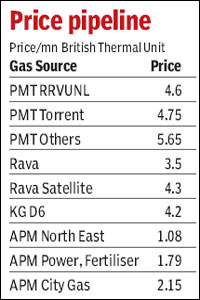
Gas produced by others such as Cairn India and BG too are priced based on their production sharing deals with the government, taking oil price as a factor. (See table) But public sector producers get a price fixed by the government based on the Tariff Commission’s advice. Since production sharing deals are signed at different times, there is a wide variation in the sale price of gas. While the administered prices of gas produced by ONGC and OIL are the cheapest in India , gas from the Panna-Mukta-Tapti field is the costliest.

The government plan means an ultimate integration of natural gas pricing for both public and private sector units, to create a strong investment climate for the sector. This will mean, as FE reported earlier, removing the administered price mechanism of natural gas, because of which there are different prices for public sector and private sector companies at present.

Oil and gas expert and KPMG executive director Arvind Mahajan said the move to delink gas price from the crude price makes sense as gas price is less volatile compared to that of crude. “That is because, on a day-today basis, gas is not as tradable as crude because of transportation issues. Besides, gas from a new source — shale gas — is also available,” Mahajan said.

Globally, the natural gas market is increasingly being seen distinct from that of crude oil because gas is more widely available from diverse and more widespread reserves. Also, North America’s success story of commercially producing shale gas and similar plans by China herald an era of abundance in the case of gas, unlike that of oil, experts said.

Mahajan said that the government should clarify how it would interpret the apex court order with respect to the state’s final say on gas pricing for the benefit of investors....

Source: Financial Express
__________________________________________________________________________________

May 12, 2010

Open gas market still a pipe dream

The Supreme Court verdict in the case between Reliance Industries (RIL) and Reliance Natural Resources (RNRL) has brought crystal-clear clarity to the supreme role of the government in the gas sector. According to the verdict, the government will take the final call on pricing, marketing and utilisation of gas. 

Put simply, once an energy company discovers gas, the government walks in to fix the consumer list to whom the gas will be sold, the price at which it will be sold, and the quantity that each consumer will get. The energy company that will take the risk of equity investment in exploration will have to be content with a rate of return that the government will deem fit as per its wisdom, keeping ‘national priorities’ in mind. 

While this is perhaps the ‘best solution in the given circumstances’, it may not work in the long term. Private investors would want more flexibility and a decontrolled regime if they are to invest big bucks in the country’s hydrocarbon sector. So, while the verdict has removed the uncertainty for RIL, RNRL and millions of shareholders, it will be seen with scepticism by future investors. 

In fact, even existing investors would be wary if this was to be the permanent policy. As global fund manager, Arvind Sanger, managing partner of Geosphere Capital Management, said, the government can always second-guess the price at which the fuel will be sold. More importantly , while regulation is necessary in imperfect markets — like in India where demand far outstrips supply — the question is whether it should be the government that should double up as the regulator? After all, governmentowned companies are also competing with private oil companies for the same blocks. The government’s role in fixing all these terms could certainly lead to questions over conflict of interest. 

There is an urgent need to establish an independent, empowered regulator for the sector who should be able to take such decisions till the market evolves. More importantly, the regulator should be in a position to evolve the policies from time to time reflecting the evolution of the market in India and the changing global gas market. 

That apart, the government has to initiate and proactively work towards establishing a market in the country. One of the biggest impediments in developing the country’s gas market is the abysmal growth of the pipeline sector. Just like power transmission lines that carry electricity from the production point to the consumer, pipelines have to be up and running if the country has to maximise its gas potential. 

The thumb rule for such investments is 1:1.5, that is, for every rupee spent on generation, Rs 1.5 needs to be spent on building transmission and distribution lines. The same, or perhaps more, is true of the natural gas sector. So, with gas production ramping up with new producers in the game, there is an urgent need to create pipelines, both trunk and spur, across the country that will allow consumers to access the gas. 

At this point, there are only two trunk pipelines in the country: the HBJ pipeline that connects the western coast to northern India, and the recently-commissioned Kakinada-Bharuch pipeline by Reliance Gas Transmission India (RGTIL). The entire southern region, which has enough and more gas consumers like fertiliser, power and industry, has a huge unmet demand. Lack of pipeline in the region leaves the region with no choice but to buy expensive alternatives like naphtha or imported liquefied natural gas. This also tends to impact price bids. While RIL cannot be blamed — as it was following government directives — bids for the Krishna-Godavari gas — the first attempt to adopt a transparent discovery mechanism — were only called from consumers who had stranded capacity, i.e., consumers who were unable to operate at full capacity due to lack of gas. 

The entire process of price discovery can only be ascertained if all players can participate in the bidding process. This will need the country to develop a gas pipeline network like the developed markets. The spot market in such economies constantly reflects changes in global demand-supply dynamics. For instance, gas prices have crashed to just about $3 per million British thermal units (mmBtu) from the highs of $11-12 per mmBtu just a year ago with the discovery and popular acceptance of shale gas in the US as an alternative form of energy source. Unfortunately, little has been done to get the pipelines going. In fact, the government’s flip-flop on pipeline policy and the differences between the petroleum ministry and the petroleum and natural regulatory board — which has largely been left with little powers — has only delayed the construction of pipelines. The pipeline sector needs to be opened up and investors should be allowed to invest in trunk and spurt pipelines as long as they can take the risk of getting the gas and the consumers. The government’s role in this has only jeopardised the growth and deregulation of the gas industry. 

Policymakers who launched the new exploration licensing policy (Nelp) in 1999 had sought to initiate deregulation in the upstream exploration sector with this move — something which even defence lawyers (RIL’s legal counsels) cited while arguing the case. RIL chief counsellor Harish Salve admitted that at one point, RIL too had approached the government for its marketing rights. The objective behind Nelp was to open up exploration to private oil companies as opposed to the earlier regime where private oil companies had to mandatorily tie up with a national oil companies to get production rights. 

So, while a private oil company could take up a block identified by the government for exploration, it would have to bring in a PSU oil company as a partner to begin producing crude oil or gas. Blocks such Panna Mukta and Cairn’s Barmer are cases on such nominated blocks before Nelp was introduced. 

The Supreme Court verdict has brought in the much-needed clarity, removing all doubts about who manages affairs in the gas sector in the country, but this can only be a stop-gap solution to the larger issue of evolving India’s natural gas market. Is the government listening?

Source: Economic Times
__________________________________________________________________________________

May 7, 2010

Gas pricing muddle gets deeper

A recently commissioned study by GAIL has resurrected the debate on natural gas pricing. The report recommends price pools for the power and fertiliser sectors. But why look at pooled price? Can we have it for the entire sector? Even if we can, should we? If not, what pricing methodology should be adopted, given that largely the end-user industry is policy constrained?

Dual pricing mechanism has being a key characteristic of the Indian gas market; while some sectors purchase gas at highly subsidised rates, others procure it at market determined rates. For instance, 97 per cent of ONGC's total production is sold at a subsidised rate and 3 per cent at a market-determined rate; for OIL the figures are 88 per cent and 12 per cent respectively.

Private players, on the other hand, are largely free to set their price. The end result: disparate price levels leave end-users apprehensive, particularly the power and fertiliser sectors which consume over 50 per cent of the gas. These industries are thus clamouring for pooled pricing; overlooking the larger issue of a sustainable pricing.

Reading through the report it seems that the prescriptions will only aggravate the ailment. To begin with, the concept of pooled prices is devoid of economic logic. One price for the entire sector makes mockery of the concept of plant-level economics.

A flawed concept

While today economics persuades seller and buyer to negotiate and arrive at a price, pooled prices will impede the interplay of price determination. By pooling prices, we are giving significant powers to both the sellers and buyers to abuse the market with higher price trajectory, irrespective of how the pool operator functions.

As an example, from the buyer's perspective, NTPC, with its large consumption base, will lose all incentive to exercise its buying power. Why it should, after all, if the prices eventually are to be pooled for the entire sector? Sellers, on the other hand, would try to jack-up prices; they have every incentive to charge a higher price. Sellers know that by charging higher prices they are not going to affect an individual buyer, as prices eventually will be pooled.

Further, determining and actually implementing pooled pricing would be an uphill task made more difficult by diverse sources of gas with varied cost of production; a fact accepted by the report. Creating detailed guidelines for constitution and operation of a pool, notifying a pool operator and setting in place an institutional mechanism will indeed be demanding.

Though it is intended to be revenue neutral, this could turn out to be the most significant challenge. Existing contractual obligations will add to the confusion; because if implemented, some end-customers will see lower prices, while others will witness higher prices. Though not strictly comparable, how can we disregard the confusion that the March 2007 directive from the Ministry of Petroleum and Natural Gas caused when it directed Petronet LNG to pool the Regasified Liquefied Natural Gas prices and charge uniform pool prices to all existing and new customers?

The move, expectedly, didn't go down well then, and the matter was taken up with the Supreme Court, where it is still pending. Instead of moving away, one gets a feeling that we are entering the pooled price muddle, although through a different route. By adopting the pooled mechanism, we also completely disregard the role competing fuels play in the determination of gas prices. This is especially valid for gas, as it does not have an exclusive market. The role of competing fuels thus becomes imperative for the overall gas penetration.

The right approach

The report accepts that this is a temporary solution till we graduate to a developed state of market. What should be our approach in this interim period given that pooled pricing is weighed down with significant conceptual and operational challenges?

The Indian market is still far from a situation in which gas price is determined through gas-to-gas competition. A cost-based approach is filled with several well-accepted negativities. Thus, the netback pricing approach is the right mechanism for the country given the state of development and more so because the role it emphasises for competing fuels.

This is because the starting point of the netback approach is the determination of the final consumer's willingness to pay, as expressed by the maximum price of gas at which the end-user would be willing to use gas as an alternative to other fuels.

Each sector will thus pay for gas based on the fuel it would replace. Not only will this reflect true demand for gas, it will also result in the optimal utilisation of a scarce resource. It will send the right price signals to each of the end-customers; a key ingredient for sustainable economics.

As the Government acknowledges, the pool of subsidised gas is depleting and the future availability will be a question. Time is thus right to move to a price trajectory which is sustainable to both the producers and consumers in the long run.

Rather than a decree from the Government, price uniformity should be the end result of structural changes in the market. To intervene in the process of structural changes will only take us farther away from the path of a developed gas market.

Whatever pricing methodology the Government will finally adopt, irrespective of the pulls and pressure from various Ministries representing the key end-user industries, it has to incentivise the production and consumption of natural gas by sending the right policy signals. Else, the fallout will be clear — international oil majors will steer clear of the country as an investment destination with its resultant implications. The decision by two major international players to walk off the KG Basin can be cited as an example.

Source: Hindu Business Line
__________________________________________________________________________________

April 21, 2010

Don’t pool gas prices

The government is seriously considering switching over to pooled gas pricing in a bid to bring some sort of uniformity in prices for the supply of natural gas to customers in different sectors. The Indian natural gas market is highly fragmented owing to prevalence of different prices for different industrial sectors. The idea behind the government’s plan to introduce pooled pricing, at least for specific sectors if not across the board, is to pave the way for the integration of the domestic gas market. This is a well-intentioned move but may not help in the development of the Indian gas market. Rather, there is a risk that it might end up retarding the growth of the market.

India took a significant step forward with the institution of a national exploration licensing policy (Nelp) that has led to several major gas discoveries and dramatically changed the domestic gas availability scenario. For example, Reliance Industries Limited’s (RIL) D6 block in the Krishna-Godavari (KG) basin now accounts for 32% of the country’s natural gas production. The Nelp regime allows contractors freedom to sell gas at market determined prices. However, contractors need to discover a market price through an arm’s length transaction. If the government shifts to pooled gas pricing, this route for price discovery would get foreclosed.

There are four main sources of domestic gas supply in India—APM gas, gas available from pre-Nelp blocks, Nelp blocks and imported LNG. The price of APM gas is $2.2 per million British thermal unit (mmbtu), gas from pre-Nelp blocks costs $5 per mmbtu, gas from RIL’s D6 Nelp block is priced at $4.2 per mmbtu and spot LNG at $6-7 per mmbtu.

As a common practice, contractors invite bids from gas consumers to discover market prices. However, if the government decides to pool the gas available from all these sources to work out a single price for consumers in a particular sector, there will be no way left for producers to discover market prices.

The government has set landfall price for gas from RIL’s D6 block at $4.2 per mmbtu. If the private contractor is still able to make profit, it is because of economies of scale. If the production capacity of the block were less than 25 million standard cubic metre per day (mmscmd), it would not be viable for RIL to supply gas at that price.

This is the reason private gas producers are wary of the government’s intervention in setting prices for their gas production. Some of them have already started going slow on development work for their discovered fields. This is likely to delay supply of additional gas from the concerned blocks.

There is also a risk that the pooled gas price mechanism would lead to institutionalisation of government intervention in the determination of natural gas prices, eroding investor confidence in India’s oil and gas exploration regulatory regime. Oil and gas players take their investment decisions based on the consistency of the regulatory regime. If they lose confidence in the Indian policy regime, private investors’ outlay on domestic oil and gas exploration might start drying up. If that happens, it would really jolt India’s energy security goal.

Currently, APM blocks account for 30% of India’s domestic gas supply. Gas production from APM blocks is declining. Meanwhile, share of non-APM gas is expected to rise as more Nelp blocks go onstream in the coming years. So, consumers in key sectors like power and fertiliser will have to increasingly depend on non-APM gas to meet their feedstock or fuel requirement.

Most of the new discoveries are being made in offshore areas, especially deep waters where cost of producing gas is much higher. For example, cost of production from onshore fields in India works out to $2 per mmbtu. In comparison, the average cost of production from offshore blocks is estimated at $3-4 per mmbtu. Besides, evacuating gas supplies from offshore sites also involves higher capital expenditure.

While domestic gas availability is expected to be comfortable until 2014, demand is likely to overtake domestic gas supply beyond that, necessitating stepping up of costlier LNG imports in a significant manner. Since India is importing only a limited quantity of LNG under long-term contracts, it will have to access spot markets for additional LNG supply. Price of LNG available under short-term contracts tends to be higher and also more volatile as it closely follows the international crude oil market.

If there is volatility in the global crude oil market, the difference between the price of imported LNG and pooled gas could rise sharply. To maintain the pooled gas price at a moderate level, the government might be tempted to force private Nelp contractors to hold down their prices. There is, therefore, fear that private gas producers might end up bearing the subsidy that would be required for maintaining credibility of the pooled price system in times of high crude oil prices.

As India’s natural gas demand is projected to grow at a much faster pace than availability from domestic sources, a sensible policy would be to encourage bulk consumers to meet a part of their gas requirement through imports. Through long-term contracts, bulk supply of imported LNG can be tied up at reasonable prices. This would help in increasing overall availability of natural gas in the country and encourage a shift from dirty coal towards cleaner fuel, particularly by industries that can afford such a shift. At the same time, it will also force those industries that cannot afford natural gas to shift their attention to using washed coal instead. This would help the coal industry to better plan its coal washing capacity. Such a scenario will see India making a better use of its energy mix, without compromising its emission reduction goals.

Production from APM gas fields of ONGC and OIL is declining. Public sector companies are not making the investments required to restore gas production, as they are selling gas at prices which are lower than production costs. If gas were not available from RIL’s D6 block, the country would be facing a huge gas supply shortfall.

It is unfortunate that the government has not learnt any lesson from the APM gas policy’s failures. Instead of focusing its attention on removing natural gas supply bottlenecks, it is busy exploring opportunities to regulate gas prices. This does not augur well for the future of the Indian gas market....

Source: Financial Express
___________________________________________________________________________

April 15, 2010

Regulator to re-look gas transmission tariff

With the number of players in gas pipeline infrastructure expected to increase from the present six, the Petroleum and Natural Gas Regulatory Board (P&NGRB) feels the need to take a re-look at the transmission tariff.

A view is emerging that for India, the model based on the entry-exit system, popular in Europe especially in the UK, would work, official sources told Business Line. P&NGRB is working on a national gas management system (NGMS) to streamline tariff-sharing among various pipeline system owners.

“P&NGRB has examined the approach paper and is likely to appoint an international consultant for the purpose,” an official said. This was to ensure that consumers at geographically disadvantaged locations were not excessively burdened with higher tariff, the official said.

Under the entry-exit system, a fixed charge in the form of entry charge is collected from the shipper for ‘per unit' of commodity. In addition, the shipper has to pay transportation charges in proportion to the distance travelled by the commodity.

Currently, P&NGRB regulations for the transportation tariff envisages a zonal tariff system, which allows a uniform tariff within a zone of 300 km from the delivery point; subsequently, there is a change in tariff at the next zone and so forth. The available models for pipeline tariffs are postalised tariff, distance-based tariff and entry-exit tariff.

Under the postalised tariff model, a single tariff is applicable throughout the system. In the case of gas flowing from one system to another, both operators are eligible to charge tariff. While in the case of distance-based tariff, the shipper has to pay tariff in proportion to the distance travelled by the commodity.

There are currently seven transmission pipelines and seven regional networks. The transmission pipelines are operated by six players – GAIL (India), Gujarat State Petronet Ltd, Gujarat Gas Company Ltd, Reliance Gas Transportation Infrastructure Ltd, Indian Oil Corporation, and Assam Gas.

Mr B.S. Negi, Member, P&NGRB, said: “In a competing economy, the shipper may have to transport gas through systems owned by various entities. The chargeable tariff, which a shipper needs to pay, will, therefore, be different from place to place. Normally, a shipper using more pipeline systems may have to pay much higher tariff.”

Asked what would be the revenue-sharing model under the entry-exit concept, Mr Negi said, “The first model can be implemented wherever the gas enters a system; the entry charge will be collected by the transporter and the exit charges will be collected by the pipeline system operator who delivers the gas to a customer. The sharing of revenues will be decided by NGMS based on a formula.”

In a multi-operator regime, the second model can be implemented where all pipeline owners will be allowed to develop a network according to P&NGRB regulations and NGMS would work as a shell company where the equity of each pipeline owner will be in proportion to the pipeline capacity that he will offer to the NGMS.

Source: Hindu Business Line
__________________________________________________________________________________

VAT on natural gas could have 4% cap

The proposed price pooling for natural gas—a way of leveling the consumer price of gas without affecting the interests of different producers—may be accompanied by major changes in the way natural gas is taxed in the country. The petroleum ministry is looking at a proposal to cap the state-level value added tax (VAT) on natural gas at 4% as well as to simplify the tax regime that applies to gas produced from various fields.

The ministry wants price pooling for the clean fuel as the demand from the power and fertiliser units is likely to go up forcing them to rely more on imported gas, which becomes costlier when crude prices move up. The comprehensive proposal before the ministry also involves tax changes.

“Since it is the stated objective of government to provide gas as a clean source of energy across the country, according gas the status of Declared Goods would merit consideration,” the experts appointed by state-owned gas distributor GAIL recommended in its report.

Through the Central Sales Tax Act, the Centre has restricted state governments’ power to tax certain goods of special importance in inter-state trade. Now the ceiling prescribed is 4% for these products that also include crude oil and coal, but not natural gas. States now levy different rates of VAT on gas.

Besides, certain states do not allow input tax credit to gas consumers like power producers.

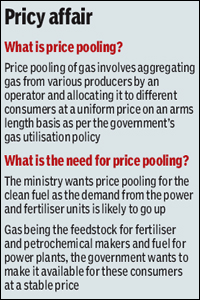
Price pooling of gas involves aggregating gas from various producers by an operator, say Gail, and allocating it to different consumers at a uniform price on an arms length basis as per the government’s gas utilisation policy. The study on price pooling commissioned by Gail also recommends simplifying the taxation regime for natural gas produced from various fields under different contracts. Since gas produced from various fields at different prices are aggregated and the consumer gets a uniform price irrespective of the source, taxes on gas produced from different fields needs some rationalisation. The petroleum ministry has asked for public comments on the issue.

Gas being the feedstock for fertiliser and petrochemical makers and fuel for power plants, the government wants to make it available for these consumers at a stable price so that they could confidently make major investments in expansion. That would address the growing energy needs of the economy as well as reduce the dependence on other fuel, which are subsidized, thereby reducing the burden on government finances. Gail’s consultants-Mercados Energy India-recommended price pooling for only the power and fertilizer sectors, which consume about two thirds of the 132-million standard cubic metre a day natural gas produced in the country now

Source: Financial Express

__________________________________________________________________________________

April 12, 2010

NTPC buying gas at higher rate may push up tariffs

Power consumers in the country could see higher tariffs, as NTPC — India’s largest power company — is planning to purchase additional natural gas from Qatar at higher rates. 

State-owned NTPC, which has gas purchase contracts with Reliance Industries and other domestic natural gas suppliers, needs more gas to feed its expansion programmes and for new plants, chairman RS Sharma told ET. “We are looking at Qatar and other gas-rich regions for securing (gas) the supplies for our projects. For example, we need around 15 mmscmd (metric million standard cubic meters per day) for our power projects at Kayakulam and Dabhol, and also need gas for our LNG (liquefied natural gas) terminal,” he said over the phone from Delhi. 

Since gas, like coal, is a key feedstock for generating electricity, any increase in gas prices would mean higher tariffs. According to power industry thumb rule, every dollar increase in gas prices adds Rs 0.30 per unit to the generation cost of electricity. 

Natural gas is mostly imported from Qatar through supply agreements. Petronet LNG, another state-owned gas supply company, buys gas from Qatar, which has abundant reserves of gas, and is world’s largest exporter. Qatar supplies 7.5 mt every year and has agreed to supply an additional 4 mt till 2013. 

LNG supply from Qatar is expected to be at a price higher than the current contracted price of $10 million British thermal unit. People connected with the development said the current uptrend in crude oil prices, which serves as a benchmark to gas prices, could lead to a 30-40% higher contract price for natural gas also. 

Domestic gas suppliers such as GAIL and IOC are available to utilities at a landed price of $6-7 per mmBtu, including the transportation cost. 

NTPC receives about 1.2 mmscmd from Reliance’s KG-D6 fields at the government-approved price of $4.2 
per mmBtu. It has also a long-term agreement with GAIL, IOC and BPCL for 1.2 mt, and had contracted an equal amount of imported LNG from Australia. 

NTPC is keen for additional gas to assure supply for its proposed expansion and for new plants. The utility, which has a gas-based generating capacity of 5,000 mw, plans to double it in 3-4 years. 

NTPC and GAIL have majority shareholders in Ratnagiri Gas & Power Company — formerly called Dabhol Power — are together setting up an LNG terminal with a capacity of 5 mt in Maharashtra, and also have plans for developing new terminals. 

As India has limited gas supplies, new gas-fired projects would depend on imported gas. The power sector consumes 45% of the total gas supplied in the country, and is the largest consumer of natural gas. According to CARE Research, demand for gas from the power sector could double by 2012 from the current demand of 80 mmscmd. 

The research firm in a recently released report said India would continue to rely on costly imported LNG. “Gas output from the Krishna-Godavari basin would not be able to wipe-out India’s gas deficit in the medium-term,” said research head Revati Kasture. 
However, Boston Consulting Group partner P Harshvardhan said: “Costing of gas will much depend on the duration of contract, and going ahead the prices would soften on account of increased supply from other countries like Australia and Nigeria, where new facilities are coming up.”

Source: Economic Times
__________________________________________________________________________________

March 26, 2010

Rationalise natural gas prices

The ministry of petroleum and natural gas is mulling an increase in the price of natural gas (under APM) produced by national oil companies (ONGC and OIL) and is reportedly in the final stage of decision-making. The ultimate objective, however, is to bring parity between the APM price ($1.79 per mmBtu) and the price of the gas produced from KG basin ($4.20 per mmBtu) by 2013 in a phased manner. There are indications that the gas procured from different sources might be pooled or averaged out to make the price uniform for all consumers. Given that natural gas is a sunrise sector and is at its nascent stage, this measure would facilitate in the removal of multiple distortions in its source-based pricing. Of course, the national oil companies would be the obvious beneficiaries, but the decision might invite flak from the key consuming sectors.

Natural gas is mainly used in power generation, fertiliser, city gas, petrochemicals & refineries, steel and sponge iron industries. Fertiliser and power plants consume around 70% of the total gas supply and command preferential allocation of APM gas, the price of which is proposed to go up. As natural gas is one of the most cost-effective fuels for fertiliser plants, gas-based fertiliser (urea) production accounts for the lion's share of total production. The government clearly prefers the use of natural gas to naphtha for the fertiliser sector as it would eventually help in pruning the piling subsidy bill. Furthermore, lower input costs would also allow government to mull the process of complete decontrol of fertiliser pricing.

As the end-use of fertiliser is regulated and given its strategic importance in terms of food security, the bigger question is whether the proposed increase in APM gas price is uneconomical from an operational point of view. In this context, an earlier analysis carried out by Goldman Sachs when this proposal of price rationalisation first came to the fore in 2007 demonstrates that even at the price of $6 per mmBtu (which far exceeds the price that may result from rationalisation through pooling), natural gas continues to be more competitive than other conventional high-priced inputs for fertiliser production.

The current gas-based power generation capacity in India is around 14,900 mw, which is about 10% of the total installed capacity. However, operating existing gas-based capacity at a plant load factor (PLF) of 90% or more would demand an amount of gas that far exceeds the current allocated supply. Thus, most of the functional projects are operating at sub-optimal PLF. Moreover, some gas-based power projects have been shelved or are pending commissioning due to non-availability of gas. But, with RIL already reaching a record level of production and superseding the threshold figure of 100 mmcmd from its D6 block in KG basin (in December 2009), such deficit related problems are likely to be sorted out. In other words, gas-based power plants would have to diversify their sources even if that amounts to an eventual increase in input cost. The analysis carried out by Goldman Sachs in 2007 (based on the then cost of power generation) inferred that even at $4.75 per mmBtu (higher than the base price of KG basin gas), natural gas-based plants are not uneconomical to operate as compared to imported coal-based or non-pithead coal-based power plants. However, the continued dominance of pithead coal-based power plants remains indisputable. The implications on viability and competitiveness of gas-based power plants, on account of movements to market-based prices in future would, however, be contingent upon the tariff regime in the power sector (whether it is capable of absorbing the increased gas price) and on the availability of enhanced flexibility to offload the available capacity of gas-based power plants (say, by operating partially or fully as merchant enterprises and marketing their capacity to inter-state or intra-state traders). The implication on affordability would also depend upon whether the power sector manages to substantially reduce its transmission and distribution losses.

The array of distortions in the natural gas sector do not allow the sector to thrive and send a wrong signal for the investors to invest in exploration and production business in the country that is so crucial to promote this viable and cleaner alternative. Moreover, given that the production of existing fields generating APM-gas is already dwindling, the key consuming sectors would eventually have to diversify their input basket towards other sources of natural gas even though they command higher prices. Thus, the gas price rationalisation is unlikely to hurt the consuming sectors much in the medium to long term and could be considered a step in the right direction.

Source: Financial Express
__________________________________________________________________________________

March 22, 2010

Industry-specific uniform gas price under study

The option of having an industry-specific uniform gas price is being considered by the stakeholders, including industry players and the Government.

“Deliberations are going on between the stakeholders, on the draft report submitted by a Spanish consultant regarding the feasibility of uniform gas pricing. One of the options being considered is an industry-specific (power, fertiliser and others) uniform ,” an official source said.

The Government is looking at the feasibility of a uniform price regime for gas and GAIL Ltd was asked to conduct the study. GAIL had appointed a Spanish consultant, Marcados Energy Market Pvt Ltd, to undertake a study on the feasibility of such a proposal, including legal and technical issues to be addressed in case of a uniform price. The final report is expected next month.

Pooled price

Explaining the concept of industry-specific uniform gas price, sources told Business Line that “it would mean that the end-consumers of the said sector, whether it is fertiliser or power, get gas at the pooled price derived for that industry category.” In other words, if the allocation of gas for the power sector is 40 million standard cubic metres a day (mscmd), a pooled price from all the gas sources would be worked out for that quantity.

Agreeing that this may not be easy, sources said, “Dynamics of such a pooling price are being worked out. There are a lot of legal and technical issues that need to be addressed, such as the pricing regime should not violate the contract, whose network should be utilised for the purpose, and who will be nominated to buy the gas. It has to be a transparent pricing mechanism.”

Currently, there are different types of gas pricing regimes – gas sold at administered price, under production-sharing contract such as those from joint venture fields, under the New Exploration Licensing Policy, as well as R-LNG (re-gassified liquified natural gas). Thus, the delivered price ranges from $2 per million British thermal units (mBtu) to more than $7/mBtu.

Source: Hindu Business Line
__________________________________________________________________________________